Welcoming Patchy - a cute new Kindle cosy

Patchy - a super cute Kindle case

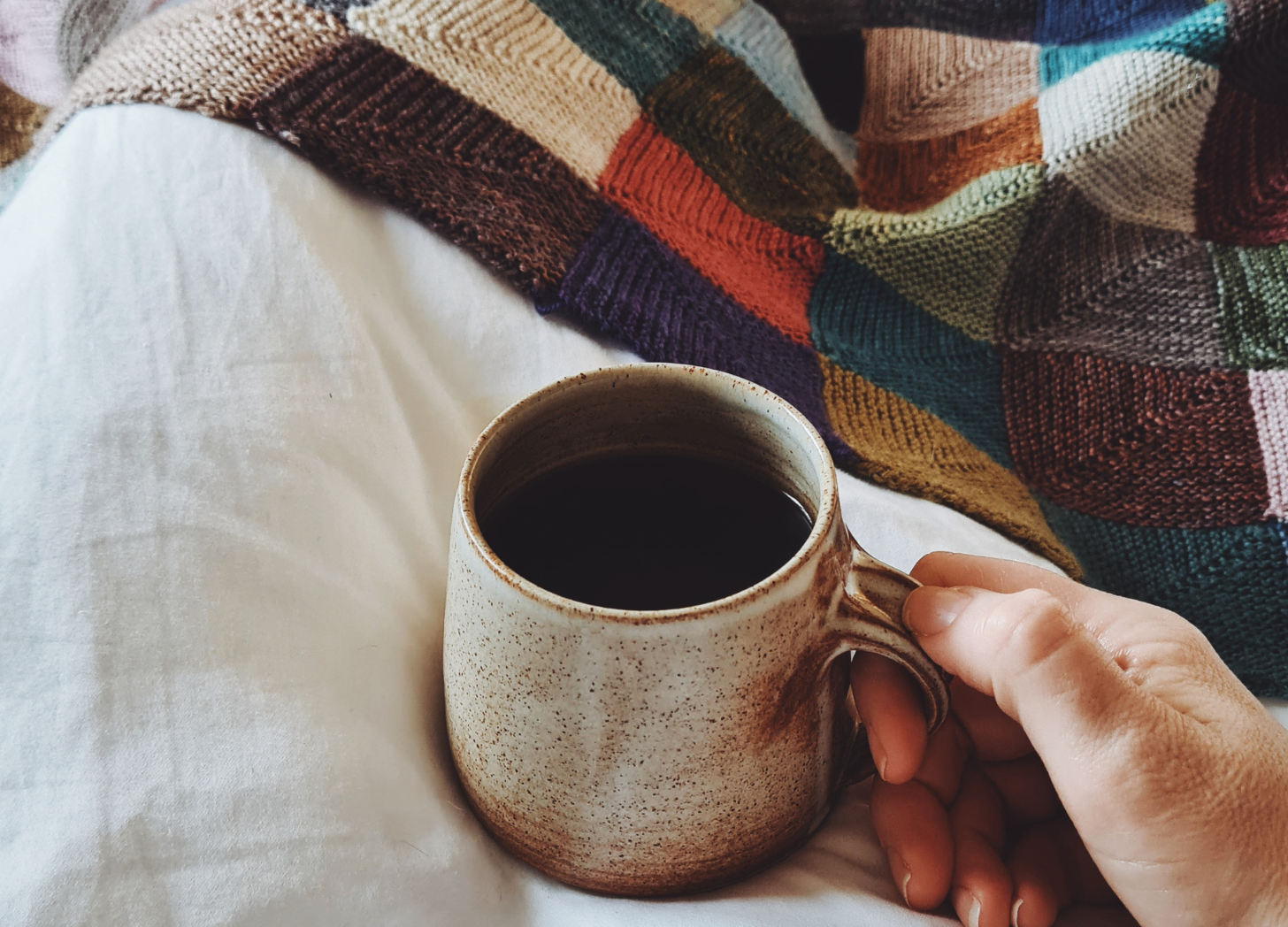
What all the best dressed Kindles are wearing this season - Patchy - the stashbusting Kindle cosy with a bit of a difference.

Patchy is a doubled layered cosy - for maximal protection for your Kindle - one side is made up of tiny mitered squares, the other is cosy stripes.

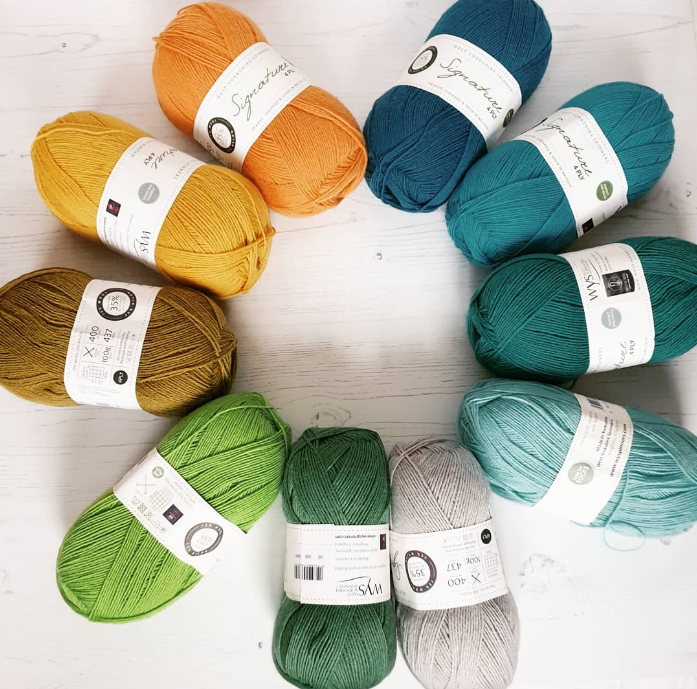
Using sockweight yarn from your leftovers Patchy is the ideal way to have fun with colour and also create something cute and functional.

Yes, of course you can buy a commercial Kindle case from any number of big corporations but there is something very stasifying about creating one yourself - even more so when you are making it from yarn leftover from other projects.

The case knits up very quickly - once you have done the mitered square side, the stripy liner is knit in the round so it’s ideal for travel or purse knitting.

Perfect for yourself or for gifting - ideal for the reader in your life who likes something a little bit different.
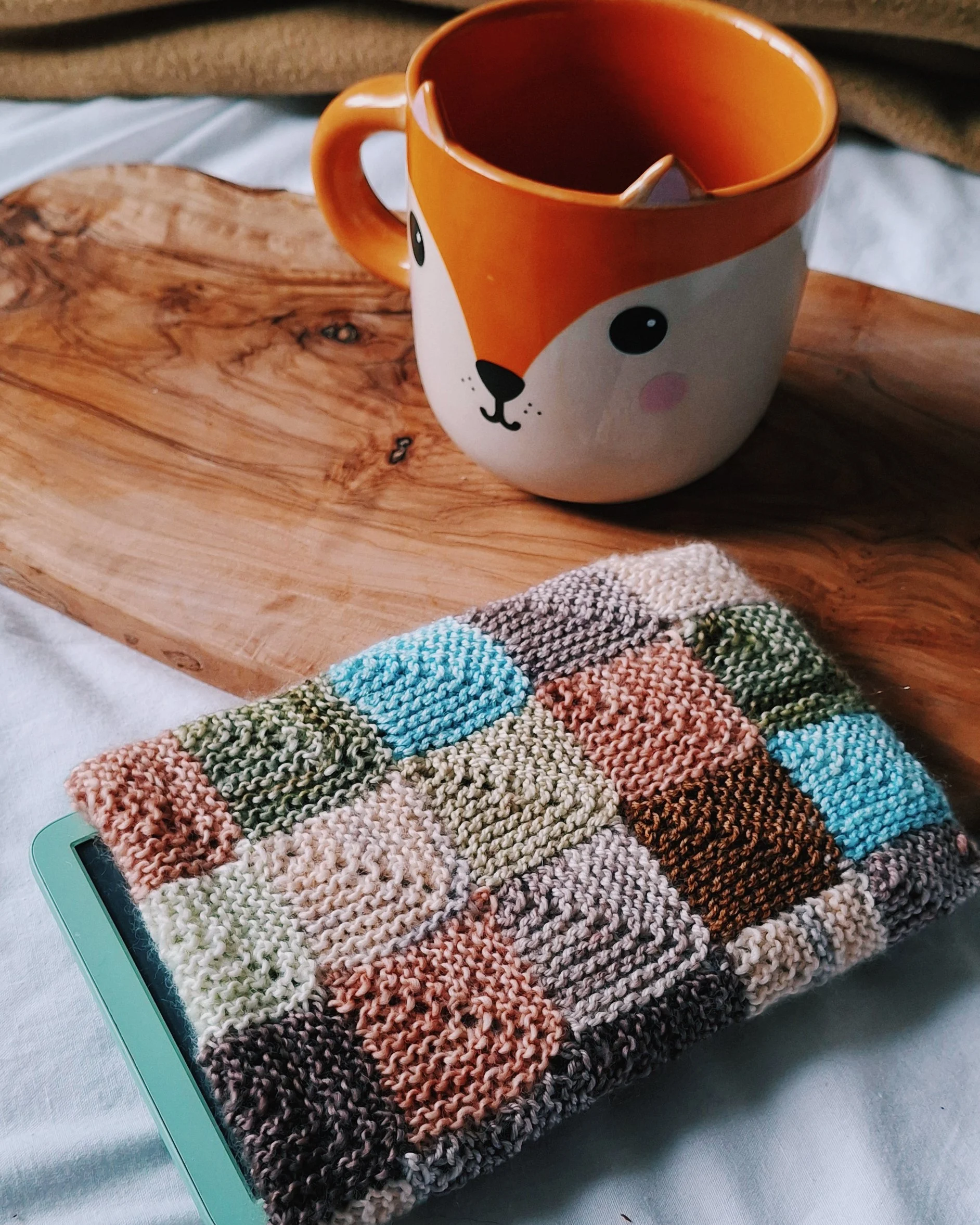
Patchy
£6.50

What all the best dressed Kindles are wearing this season - Patchy - the stashbusting Kindle cosy with a bit of a difference.

Patchy is a doubled layered cosy - for maximal protection for your Kindle - one side is made up of tiny mitered squares, the other is cosy stripes.

Using sockweight yarn from your leftovers Patchy is the ideal way to have fun with colour and also create something cute and functional.

MATERIALS

Yarn: Approx 35g scrap sock weight (fingering) yarn in various colours.

Needles: 2.5mm needles. DPNs for mitered squares and a long circular for the striped liner.

Gauge: 32sts & 44 rows to 10cm (4") in stocking st.

Finished size lightly blocked: 12cm (4.7") wide, 34cm (13.4") long (turned length when double 17cm, 6.7").

To fit Kindle dimensions: 15.7cm x 10.8cm x 0.8cm (6.2” x 4.3” x 0.32”)


5 reasons to knit a cowl

I know that shawls get a lot of attention and I am a complete sucker for a cute asymmetric shawl at the best times but bear with me here.

Often overlooked but super practical, the humble cowl has a few significant advantages over it’s larger, flouncier cousins.

It is easier to style (at least in my opinion): There is no need for advanced scarf drapery or tutorials on how to wear it. Also no loose dangly ends to dip in your coffee or catch on passing doorhandles. In my imagination I am serene, elegant and free of such obstacles, in real life - not so much.

Knit either way: One of the main advantages for me is that for most designs they can either be knit sideways (flat and then seamed, or with a provisional cast on) or they can be knit in the round. Both have their pros and cons but I enjoy their adaptability in this regard. Knitting flat and then seaming gives you the advantage that you can knit until you are happy with the length - perfect if you only have 1 skein of an aran weight yarn for example.

It is far easier to wear a single loop (slightly snug) cowl than it is to knit it in the round, miscalculate the number of stitches needed and end up with a thin, narrow tube around your neck 😂

Easily adjustable: shawls require a certain commitment in terms of the amount of yarn needed if you are to avoid trying to style an impossibly small triangle. Cowls offer a lot more flexibility and it is easier to calculate your yarn requirements in advance as your stitch count will remain the same throughout the project.

Working on a smaller scale: I love that cowls provide a smaller canvas for a pattern. It can be a really useful opportunity to assess how a given design drapes or works. The same is true of hats too but it is easier to wear a ‘slightly too drapey’ cowl. No one really wants to wear a baggy hat.

Less bulk: As someone who often wears a winter coat but strongly dislikes the feeling of too much bulk I really appreciate a snug, single-loop cowl on cold days. Whereas shawls can end up bunched under my chin, a cosy cowl knit in butter soft yarn is nothing but comforting (and warm).

How about you - do you prefer a cowl or a shawl?

I’ve added my favourite patterns below, but if you want to try out any of them for yourself all my cowl patterns currently have a 20% discount on my website - or use code COWL25 on Ravelry.

Coffee Break Cowl
£6.50

This is a textured cowl designed to be knit flat, from a provisional cast on and then closed using Kitchener stitch.

1 skein of worsted weight yarn will be ample to produce a cowl which fits not-too-snugly around the neck.

If you have 2 skeins, simply carry on going and you will have a wonderfully squishy cowl that can be looped once around the neck to keep you super toasty.

If Kitchener stitch is enough to scare you rigid you could work a three needle bind off instead and no one would be any the wiser.

Yarn: The Fibre Co. Cumbria Worsted
Yardage: 200-400m (220-440 yds)
Needles: 4.5mm

You will get a PDF (432KB) file


Colour Block Cowl
£6.50

This lightweight cowl is knit in the round using a sock yarn gradient kit for the main colour and a small amount of contrast colour for the blocks.

It is straightforward to knit and provides an ideal opportunity to practice stranded colourwork.

Materials:

Needles: 3.0mm circular needle (as there is no US equiv for 3mm, select either size 2 or 3 depending on the fabric you prefer).

Yarn (MC): 5 x 20g mini skeins - As Yet Yarns superwash merino ombre gradient set. Colourway Volcanic Mist.
(CC): Approx 50g Madelaine Tosh, Tosh Sock (100g/361m/395yds). Colourway Saffron.

Notions: Tapestry needle for weaving in ends, stitch marker, scissors.

Gauge: 22 stitches and 33 rows in 4" (10cm) in stocking stitch.

Size: Depth 16.5" (42cm), circumference 26" (66cm).

You will get a PDF (3MB) file

Equinox Cowl
£6.50

Sometimes you find a yarn that you just want to knit - allowing it to be the star of the show.

When I found this long-change gradient Ombre DK from Madrigal Yarns I immediately had a design in mind for it.

It knits up super quickly - in fact the cowl is so named because I knit it in about 12 hrs in the course of the Spring Equinox. Partly because the short, 7st lace repeat pattern is straightforward to memorise and partly because watching the colour changes happen is so much fun.

This pattern would work well with solid or semi-solid colourways as well as other long-change gradients such as those from Noro.

The cowl is knit in the round - so no seaming required at the end.

MATERIALS:

4 mm circular needle (60cm cable length).

1 x 100g Madrigal Yarns Ombre DK 100% superwash BFL, 200m/219yds. Colour Ombrolivia.

GAUGE: 22 stitches x 28 rows = 10cm/4" in stocking stitch, blocked.

SIZE: 22.9" circumference x 9.1" depth (58 x 23cm).

Take the easy option

Don’t get me wrong, we all love a challenge from time to time. But there’s nothing wrong with going for the easier option every now and again.

If you have always admired the look of colourwork but felt slightly intimidated by it I know exactly how you feel. The thought of having to hold two strands of yarn at the same time, not to mention following a complex chart can be enough to make the bravest of souls think twice.

But this cunning, slip stitch pattern avoids the need for all that and creates a lovely intricate texture whilst only holding 1 strand of yarn per round.

Ideal for stashbusting too

The yarn I used for this sample is the beautiful West Yorkshire Spinners Fable Brushed Aran - a beautiful, slightly fuzzy blend of wool, alpaca and mohair.

But the entire, single-loop cowl only takes 80g aran weight yarn - making it perfect for using up those leftovers in your stash

Cappuccino Cowl
£6.50

If you love the look of colourwork but have always felt a little intimidated then this fuss free, colourwork cowl is perfect for you.
The slip stitch pattern means that you are only ever working with one colour at a time - but the results look super impressive.

Because it only uses a small amount of aran weight yarn it is perfect for using up leftovers too.

Approx actual amounts:

MC 30g
C1 25g
C2 25g

MATERIALS

NEEDLES: 5.5mm

YARN: 3 x 100g West Yorkshire Spinners Fable Brushed Aran, 166m/182 yds per 100g. MC Dark Brown Oak 1226, C1 Cream Feather 1223, C2 Light Brown Elder 1225

GAUGE: 18 stitches and 24 rows in 10cm/4" in stocking stitch, blocked.

SIZE after firm blocking:

Width 22cm (8.5")

Length/circumference 58 cm (23")

Why summer is the perfect time to start a blanket

Hear me out - I know that traditionally the summer months (here in the northern hemisphere) are generally warm and not conducive to heavier knits. But have you ever thought that actually the summer is the perfect time to start a knitted blanket project.

You have plenty of time to plan and peruse your colour scheme. And then, when you start work on it, it’s pretty small and lap-sized at first. Then, when the colder months roll around it is getting to be the perfect size to snuggle underneath while you work on it - you already have a head start on your cosy winter knitting project.

Clever eh?

I remember thinking this back in 2020 when I knit my enormous Temperature Blanket. I was working a corner to corner rectangle so for the first few months (Jan-Mar) it was tiny and the rows super short. It was only once I got to the full width (Apr-Sep) that I realised that all of the full width rows would have to be done while the weather was at it’s hottest.

Not my smartest move and if I’m honest I fell behind quite a lot. Luckily I was able to catch up and did finish the project by Dec 31st - but next time around I would definitely do it differently.

If you want to plan your very own Temperature Blanket there is no rule that says you have to start in January. You could always start right now - or you could do some forward planning ready for the New Year.

Temperature Blanket eBook
£8.50

As my own 2020 Temperature Blanket drew to a close I found I wasn't ready to say goodbye to it altogether. It's was quite the year - to say the least (and 2021 has continued in the same vein) and knitting this blanket gave me so much comfort and support during some very unsettling times. During the year-long project I have learned a lot and there are definitely a few things I would do differently if I ever did this again.

In essence, this e-book is the resource I wish I had, before I started.

I wanted to create a resource for those who'd like to knit their own Temperature Blanket and this 19 page e-book contains tips, suggestions and resources such as:

  • Working out a temperature scale

  • Yarn choice

  • Estimation of yardage

  • Size and gauge

  • Choosing colours

  • Ideas for construction

Like any big project the idea of starting a Temperature Blanket can seem a little daunting. Decisions on yarn, needles, colours, temperature scales etc - can all seem a little overwhelming. But the ebook is here to help and you are very welcome to join our dedicated Discord group too.

For this project I used fingering weight yarn with 3.25mm needles, however no yarn recommendations are given here - the choice of yarn/needles used is entirely up to the knitter and the type of year-long project they wish to create.

This is where my e-book comes in. This 19 page e-book contains tips, suggestions and resources such as:

  • Working out a temperature scale

  • Yarn choice

  • Estimation of yardage

  • Size and gauge

  • Choosing colours

  • Ideas for construction

It is essentially the guide I wish I had, before I started knitting 😂

Because Kindles like to be cosy too

Well, why not.

Sometimes we just want a project that is simple, straightforward and fun - and I think this cute little Kindle Sock manages to be all 3.

Knit using leftover sock yarn (fingering weight), it’s ideal for playing with colour or stripes or any kind of pattern you care to think of.

Essentially it is knit as a long tube, closed at both ends, you then fold it in half to create a simple, reversible pouch. The double layer of fabric giving some handy extra protection against accidental knocks whilst in your handbag.

And even better, the fact that the tube is closed means that you don’t even have to bother sewing in your yarn ends - they will safely be tucked away inside, free from prying eyes.

Kindle Sock
£3.00

Because Kindles want to be cosy too.

This reversible pouch for your Kindle e-reader is worked in scrap sock weight yarn. You can have fun with colour whilst at the same time not worrying too much about weaving in your ends - they are all fully enclosed in the finished tube and no one will ever see them.

I knit this sample using the magic loop technique but it works with any method of small circumference knitting.

This pattern is offered at an introductory price (June'25), pending further updates - for different yarn weights and charted colourwork patterns.

Yarn: Approx 35g scrap sock weight (fingering) yarn in various colours

Needles: 2.5mm needles.

Gauge: 32sts and 44 rows to 10cm (4") in stocking stitch.

Finished size lightly blocked: 10.5cm wide, 34cm long (turned length when double 17cm).

4.1" wide, 13.4" long (turned length 6.7").

To fit Kindle dimensions: 15.7cm x 10.8cm x 0.8cm (6.2” x 4.3” x 0.32”)

Simple ways to make your knitting more sustainable

It is easy to fall into the trap of thinking about the big changes when it comes to sustainability. To focus on the cars we drive, the flights we take (or don’t), the food we eat. But as others have repeatedly said, millions of people taking millions of tiny actions can have a significant impact, even if those changes are really, really tiny.

And our crafting and hobbies are no exception. Yes you can go for the full-on, raise your own sheep and spin your own yarn approach, but for most people that’s simply not realistic. Instead it is far better to focus on tiny changes that you can implement gradually and in doing so have a consistent, cumulative and positive effect on the environment.

A few simple things to think about:

  1. Air miles. Using yarn that hasn’t been shipped halfway around the world is an obvious starting point. Yarn produced in your own country will have less of a carbon impact and if it is produced close to you then so much the better.

  2. Support producers who are actively trying to reduce plastic use and who are committed to reducing their carbon impact. Most reputable sellers will include this information on their websites and if in doubt you can always ask them. Eden Cottage Yarns here in the UK is very forthright for example about the fact they are committed to being as plastic free as possible and all of their goods are shipped in recycleable paper products.

  3. When buying yarn tell the vendor you don’t want or need the additional ‘treats’ that are often included and which often just get thrown away. Sweeties, teabags, pens etc are not required and just add to waste. Do you really need yet another organza bag with your purchase or a tube of sweets?

  4. Use what you have. It seems as though we often forget the simple ‘Reduce, reuse, recycle’ mantra but it’s effective for a reason. Shopping from your stash first before hitting the online cart, or maybe frogging something you never wear and reusing the yarn are both far more environmentally supportive actions than buying new. Also consider a yarn swap party with friends if you feel that your stash needs a freshen up.

  5. Avoiding acrylic yarns is always a slightly contentious one to include, being mindful of everyone’s budgets and constraints. Using natural fibres is a more sustainable choice, in general, but some of the processing required commercially to turn banana fibre into yarn (for example) is extremely intensive and arguably as environmentally damaging as the production of acyrilc fibres especially if the former is shipped from overseas. It is a delicate balancing act and not as simple as ‘avoid acrylic’. It pays to do your research as a consumer and find out exactly where your yarn comes from and how it is made, and not to assume that something labelled natural is automatically better. In addition many yarn brands now are looking at making yarn from recycled fibres and some of these are well worth a look.

There is no denying that it is a complex area and it is tempting to just throw up your hands and do nothing. There are no shortage of people who will jump in to criticise your choices anyway or to point out that you are ‘typing this on your smart phone’.

Anything to do with climate change has a habit of attracting the naysayers who segue seamlessly from ‘our changes are too small to make an impact’ to ‘well, it’s too late to do anything about it anyway’.

It isn’t too late.

Any change however small is helpful.

We can all play a part.

What tiny changes have you made in your knitting? Do let me know in the comments and let’s share our ideas and contributions.