How to convert a sock pattern to different needles

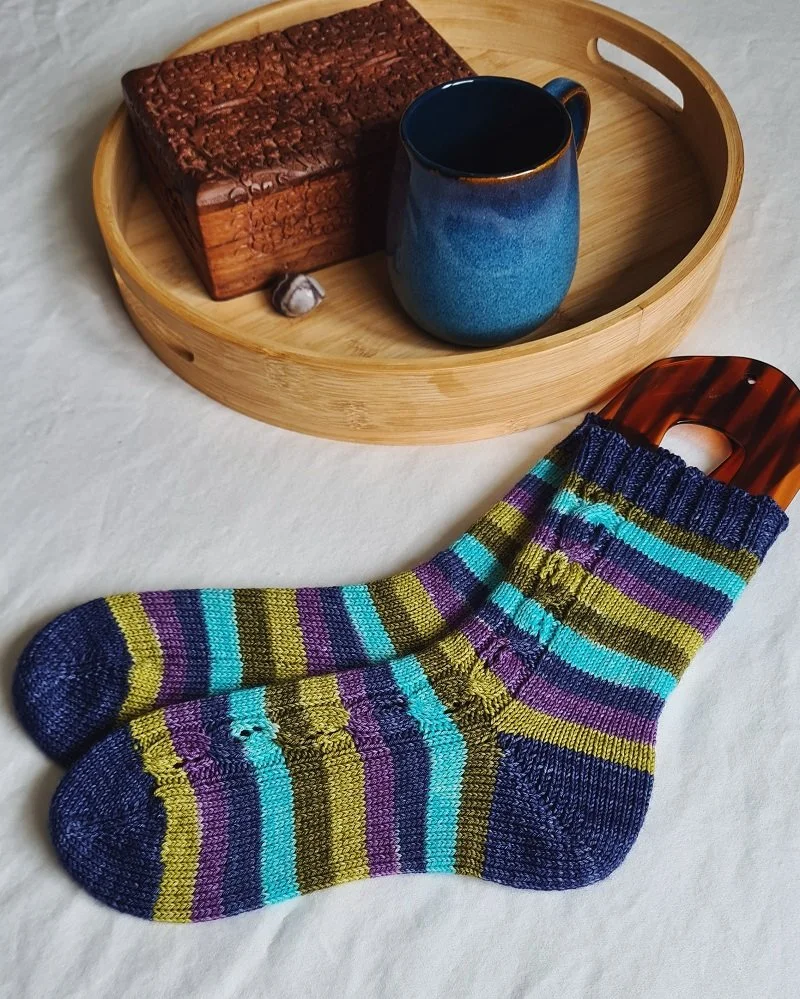
Feel Better Socks

Most sock patterns are written with a preferred method of small circumference knitting in mind - whether that be DPNs, magic loop or a small circular needle. It is of course perfectly possible to knit socks however you chose and we all have our favourite methods.

Experienced sock knitters know how to easily adapt a sock pattern for different types of needles but there are a few tips and tricks that can help you switch methods with ease.

Regardless of how the pattern is written, the key thing to take note of is the stitch count and how those stitches are distributed across your needles. Assuming you are knitting a cuff down sock, most knitting patterns will tell you how many stitches to cast on and how many are needed to knit the leg of the sock - note that in some cases (eg with cables) additional stitches are added after the cuff in order to accomodate the tightness that cables can cause.

Once you have the stitch count - in this case we are going to use 64sts - proceed as follows:

Knitting with 4 DPNs

Divide the stitches across 3 needles 16/16/32 and use the 4th to knit with. The 3rd needle with 32sts is used to hold the stitches for the back of the leg and the heel. The other two needles hold the stitches for the top of the foot. The heel flap and turn is worked across the 3rd needle. The gusset decreases happen at each side of the 3rd needle, bringing the stitch count back to 32sts.

Some prefer to use 5 DPNs with the stitches divided as 16/16/16/16 and knitting with the 5th needle.

Knitting with magic loop

This is by far my preferred method, mainly because it makes things nice and simple. Stiches are divided equally across both needles - 32sts on each. The heel is worked on one needle. I find that this works well for more complicated patterns or cables - especially across the top of the foot - as it means you aren’t dealing with mutliple needles across a 32st chart.

Knitting with a small circumference needle

Perhaps the simplest method, although it does get a bit more complicated for the heel turn. Simply cast on the 64sts, place a marker to denote the beginning of the round and knit away. Perfect for knitting the leg - and indeed the foot. I often find though that it’s easier to transfer the heel stitches to a DPN when it comes to that part, just to make life a little easier. Some people also like to use a second small circular.

Which is your favourite method to knit with?

We all have our favourites, but having another method or two up our sleeves is always handy for when the occasion arises.

Slow starts and speedy squares

I know that conventional wisdom says January is never ending but I’m still struggling to believe it is February already. I don’t feel quite ready to emerge from my winter cocoon just yet.

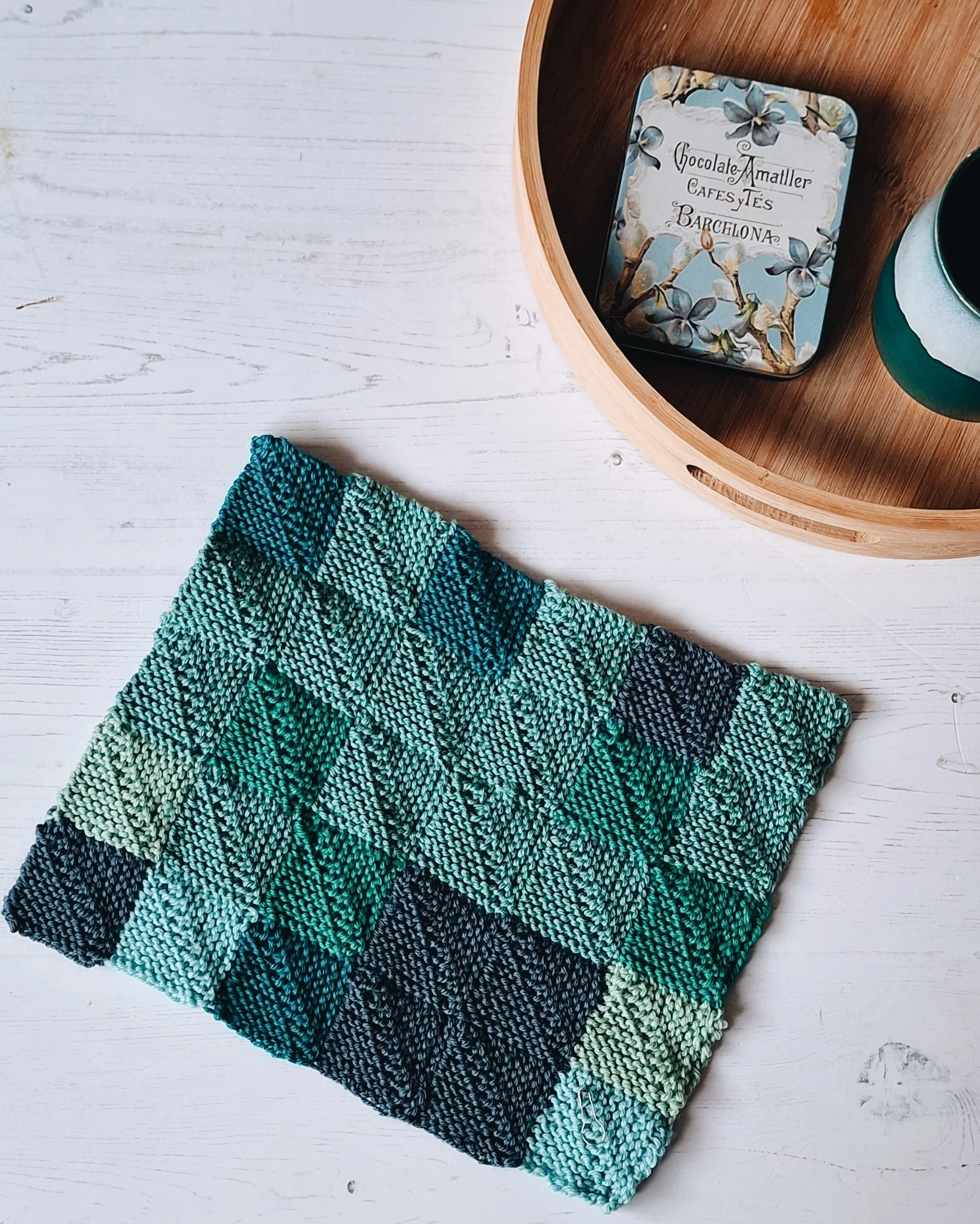
But I did want to show you the progress on my 2026 Temperature Blanket which is a kind of mash up of twin loves - Mitered Squares and Temperature Blankets.

In short I wanted to knit another year-long blanket project but I didn’t want to subject myself to any more knitting than was absolutely necessary - mindful of what happened with my 2020 project.

And so the idea of mitered squares was born - with one tiny square for each day. Much more manageable, much more achievable, much more portable.

THE DETAILS

Each square is 10 sts by 10sts with a paired central ssk/k2tog at the centre of each RS row. and takes about 10 minutes to knit (yay).

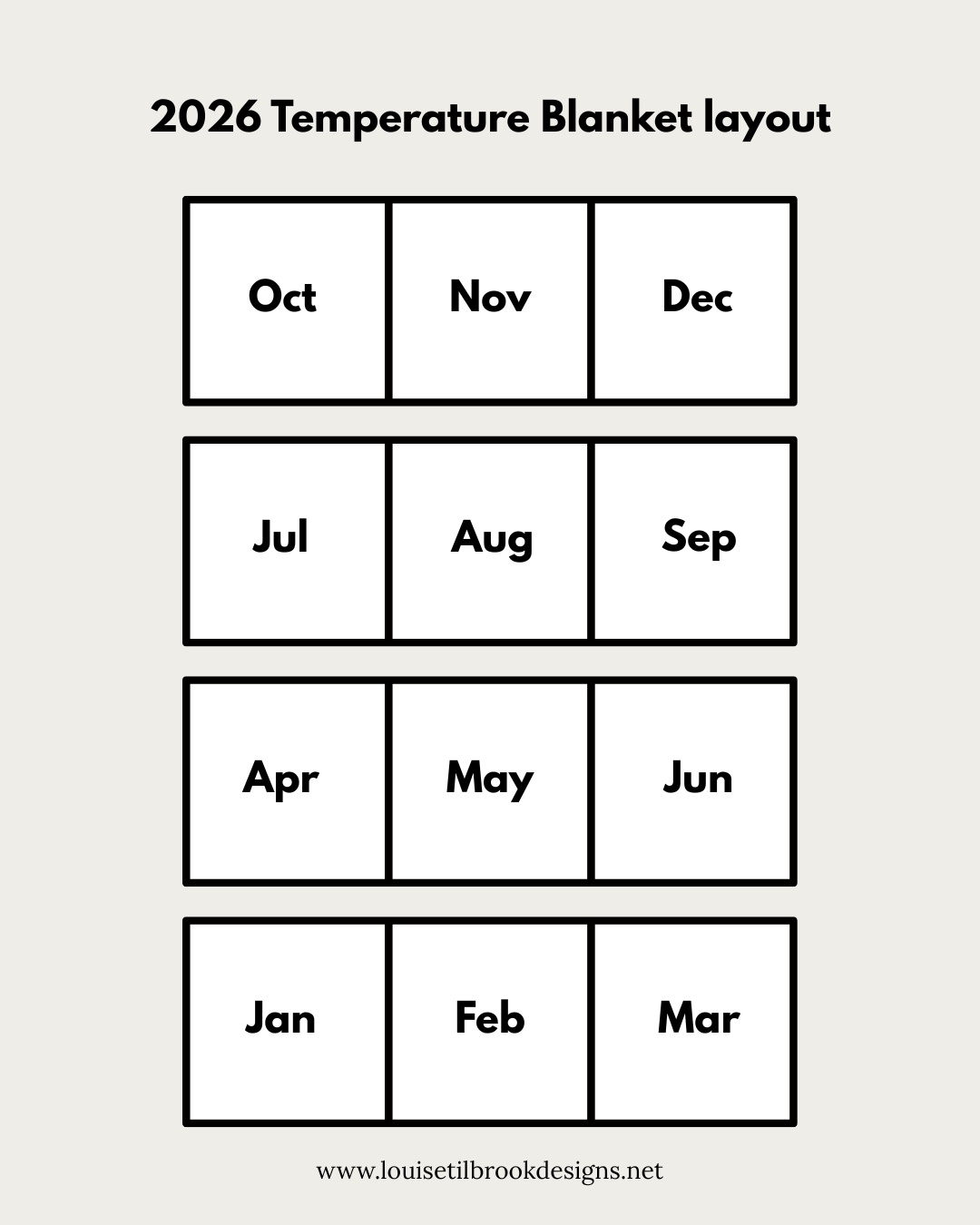
Each square measures 14.5cm (unblocked) and I am knitting each month as a panel of 6x5 squares - I’ll come up with a fudge for the non-30 day months but as luck would have it this month, the 30th/31st January were both 8 degrees (C).

Each panel is approx 27cm x 22.5cm and I think this will grow a bit on blocking.

I’m estimating that the finished blanket (arranged in 3x4 squares) will be 90cm x 92cm (36” by 36”) but I am also planning to add a border around each panel and then around the whole thing which will add to it a little more.

That’s my cunning plan anyway.

YARN CHOICE

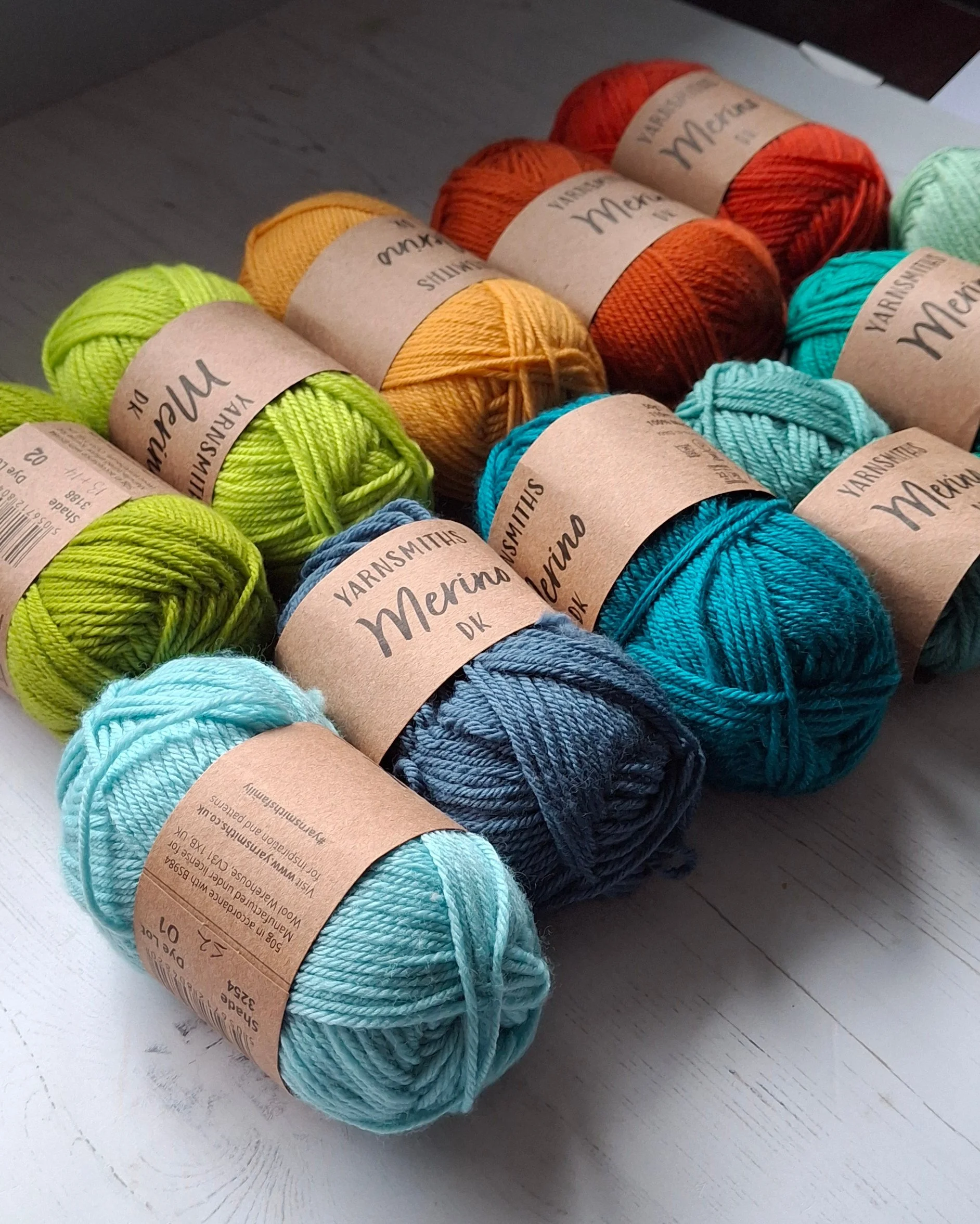
In terms of yarn choice I am using Yarnsmiths merino DKhouse.co.uk/yarn/yarnsmiths-merino-dk-superwash-all-colours which is a superwash yarn with a fabulous array of colours to choose from. It comes in 50g balls which is handy as some of the colours might not see very much use and I don’t want to have masses of leftovers (50g ball has 110m/120yds).

My scale is in 2 degree (C) increments and so far I am happy with how it is working up, although I do need to decide on some colours for the higher end - thankfully we are a few months away from needing those.

If you enjoyed this you might also like:


How to Knit a Sock Snake

This blog post was originally published in 2019. I have revamped it and edited slightly to take into account a few questions I received on it. If you would like a condensed version of this tutorial along with all of my handy hints and tips to knitting the perfect sock snake I have made them available as a short pattern download. The PDF is also available on Ravelry

Now, you know me - I love a bit of knitting efficiency and I like to knit socks in those spare in-between moments of travel and general hanging around. A recent long train journey meant that I got a bit carried away with the toe-up socks I was knitting. I normally knit around a 16” tube if I’m going to be adding a cuff and an afterthought heel but on this occasion I was engrossed in my Kindle, sipping my coffee and knitting away.

It was only when I got to my destination that I realised that I had in fact knitted close to 22” - practically the foot of sock number 2.

I was absolutely not going to rip out 6” of perfectly good sock so I decided to make a virtue out of a necessity and carry on to make a long sock snake. I had seen someone else on Instagram do this a while ago and the idea had stuck with me since then.

Step 1: knit your snake.

For toe-up socks (8-9” foot circumference, 4ply yarn and 2.25mm needles) I cast on 24 sts using Judy’s magic cast on - 12 on each needle - and work a standard sock toe with increases on alternate rows (to 64 sts). Then knit, and knit...and knit some more. I knit until the tube measured 31” from the cast on and then added a second toe at the other end.

Step 2: divide your snake in half and decide where you are going to snip.

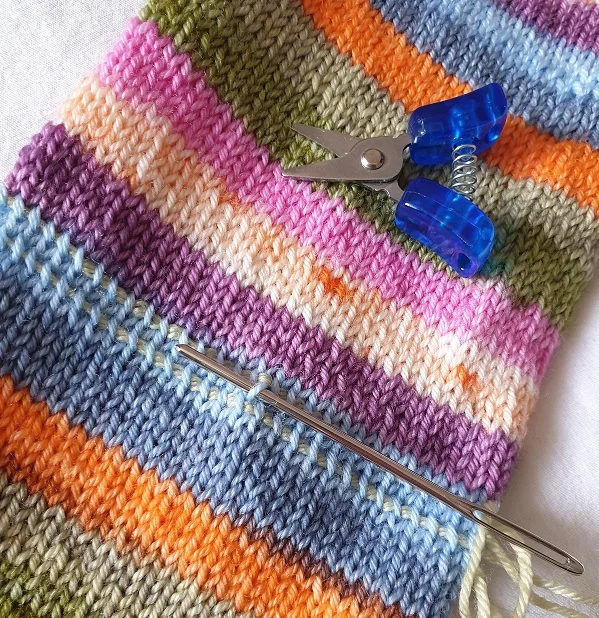
I like to fold the sock flat and pick the midway point - mark it with a pin. Then unfold it and lay it flat in front of you. Using a tapestry needle and waste yarn, slide 1 full round of stitches onto the waste yarn. Repeat with a second length of yarn - leaving one round between each lifeline

Step 3: Snip (it sounds less scary than cut)

Once your stitches are secure on your two lifelines they can’t go anywhere. Using sharp scissors - snip a stitch in between the two lines and gently unravel the yarn - I like to use the tip of the tapestry needle. Continue around the whole sock until your sock snake becomes 2 shorter snakes.

Step 4: Add cuffs

Return the live stitches to needles, join in your chosen yarn and add cuffs to the two tubes

Step 5: Add afterthought heels

Using the same lifeline process - just across 32 stitches though - add in afterthought heels.

And hey presto - 2 separate socks.


PIN FOR LATER

The Everyday Knitter Facebook Group is closing

It lasted nine years - longer than many marriages and it has been my privilege and pleasure to hold this space for you.

But sadly the group is now closed.

What happened?

A number of accounts within the group were hacked. These were most likely to have been genuine members at some point whose FB accounts were still active even though they had stopped using the app, or had died. By the way if you are reading this and don’t have two-factor authentication (2FA) turned on for your Facebook/Instagram logins please go and do it right away - LINK IS HERE

Once in the group the hackers were able to target the insecure accounts of other group members and mount an attempt to take over the group. I have an alt account there with admin rights which is the reason I still retain control. But the group is now effectively unusable as I have no way of sorting the compromised accounts from the genuine ones.

Any attempt to turn on activity leads to a flood of inappropriate comments, triggering the groups suspension.

A widespread problem

This is a considerable problem with Facebook at the moment and it is likely to get worse. It sounds dramatic but there is a concerted attempt to destabilise online communities and spread disinformation. Local FB groups and hobby groups are frequently targeted as they tend to be poorly moderated and have a high number of users with insecure accounts - for the record if you don’t have 2FA turned on your account is regarded as insecure.

Once the hackers gain control of the group - their ultimate aim is to flood online spaces with disinformation and content designed to spread hate and dissent.

Meta are fully aware and are unable/unwilling to assist.

It’s time to move on

I honestly believe that Facebook has had it’s day and this has been the final nudge I needed to take action. So, sadly as of today the group is closed.

Daily Chat Threads and WIP sharing will move to Discord - LINK HERE

All other aspects of the Everyday Knitter community will be over on Substack where I’d love it if you said hello and joined us. LINK HERE

I fully understand if you aren’t able or willing to move platforms, none of us like change after all. I have truly valued all of the friendship and support during my time running the Everyday Knitter Facebook group and I remain very proud of what we have achieved together.


How to say no nicely

Something of a theme for me recently is saying no. And to get better at saying it without succumbing to a massive guilt attack.

I wrote last week about how I was using No-vember to practice my No muscles and I thought I would continue the theme this week as we head into the Christmas knitting season.

Now, this applies at any time of year of course but especially now, the average knitter often sees a ramping up in requests for “Oh, could you just knit me this”. Such requests often come at a time when you are snowed under with things you are knitting to a deadline or frankly, you just have a lot on your plate and are knitting to retain some element of sanity in the busiest of seasons.

Non knitters frequently underestimate the time and resources needed to make a finished piece. They mean well (usually) but they can catch you unawares so it’s helpful to have a few tried and tested phrases up your sleeve, should you find yourself ambushed by a surprise request.

  • Oh heck, I think my needles might go on strike if I add any more projects to the mix.

  • I’d love to but I have projects on my needles older than my first born.

  • Well, if I start now it might be ready for 2030.

  • I really like to keep my knitting just for personal projects right now as I find it helps me to reduce stress.

  • I’d rather keep knitting as a downtime thing than turn it into a job - but thanks for asking.

  • I’m sorry but I don’t have the capacity for that right now.

  • I like to knit to relax - if I started taking on commissions I’d need to find another hobby to relax from knitting.

  • Honestly I just knit to relax - if I had deadlines it would lose all the fun.

It’s easy to forget that we have the capacity and the power to say no, especially when in saying yes to someone else - we are saying no to ourselves.

What’s your favourite way to say no?

Welcoming Patchy - a cute new Kindle cosy

Patchy - a super cute Kindle case

What all the best dressed Kindles are wearing this season - Patchy - the stashbusting Kindle cosy with a bit of a difference.

Patchy is a doubled layered cosy - for maximal protection for your Kindle - one side is made up of tiny mitered squares, the other is cosy stripes.

Using sockweight yarn from your leftovers Patchy is the ideal way to have fun with colour and also create something cute and functional.

Yes, of course you can buy a commercial Kindle case from any number of big corporations but there is something very stasifying about creating one yourself - even more so when you are making it from yarn leftover from other projects.

The case knits up very quickly - once you have done the mitered square side, the stripy liner is knit in the round so it’s ideal for travel or purse knitting.

Perfect for yourself or for gifting - ideal for the reader in your life who likes something a little bit different.

Patchy
£6.50