Sock musings

There are many good things about knitting your nearest and dearest a pair of warm and woolly socks. Particularly the fact that it does give you a lot (really, a lot) of time to sit and think. My husband is eminently knitworthy and supremely appreciative of his handknit socks, but he only averages about 1 pair per year due to the length of time it takes me to knit them.

It was during one such marathon knitting project that I found myself wondering “How many more stitches are there is a man's sock compared to a woman's?”

Being of an enquiring and scientific mind I did a bit of idle working out on the back of an envelope and came to the conclusion that knitting socks for an ‘average man” takes precisely 21% more stitches than for an ‘average woman’.

This is assuming a 64 st sock for a woman and a 72st one for her male counterpart. I didn’t include the heel in the calculation but just based it on a 15” tube and a 17” tube respectively with a sock yarn gauge of 11 rounds per inch.

Using these numbers a ‘standard’ women’s sock came out at approximately 10,500 stitches in total whereas a standard man’s sock was a significantly higher 13,500 ( a difference of just over 20%). Obviously - you need to multiply this by 2 - unless your DH likes single socks.

It’s not rocket science and it certainly won’t help you get the socks knitted, but at least it is something to ponder whilst knitting on that second sock.

Check your gauge

As with anything to do with gauge this post comes with a huge caveat. Everyone knits differently and you might not have the same experience as me. That being said I find that often when I knit a plain vanilla stocking stitch sock I find that my usual 64st on 2.5mm needles doesn't work for me and the sock ends up being ever so slightly loose on the foot.

Instead I find that dropping to 60st for me (and from 72 to 68 for DH) gives a much better fit in plain stocking stitch.

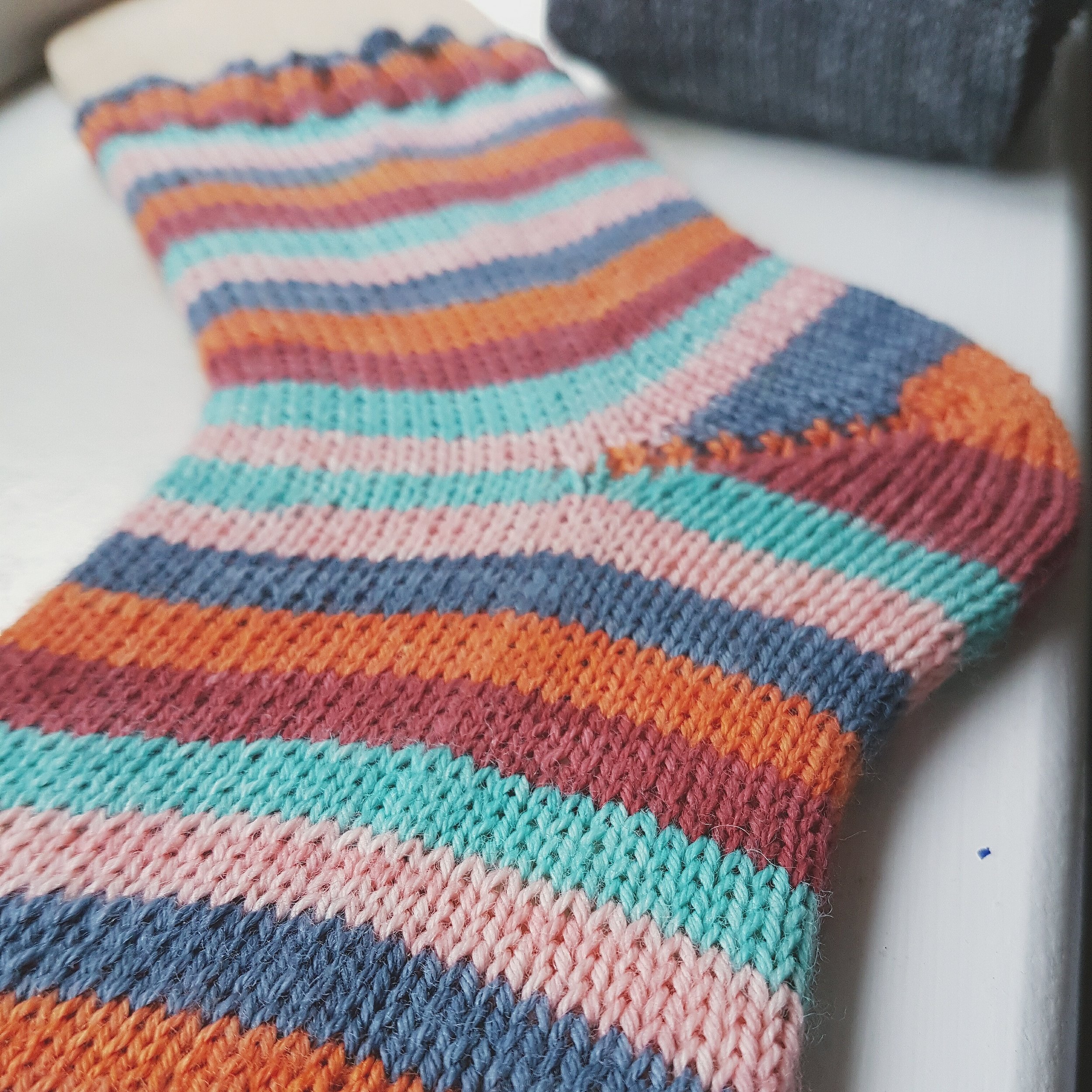
Socks with a pattern or cable often have a slight degree of extra rigidity, unless there is a lot of ribbing. Plain stocking stitch however tends to have equal stretch in both directions. This makes for a beautifully smooth fabric - all the better to show off that gorgeous self stripe yarn - but which also has the potential to be ever so slightly baggy.

Going down just those few stitches creates the negative ease that is so crucial for a good sock fit.
Do you find the same thing ? I've love to know if you have the same experience too.

The art of a good heel flap

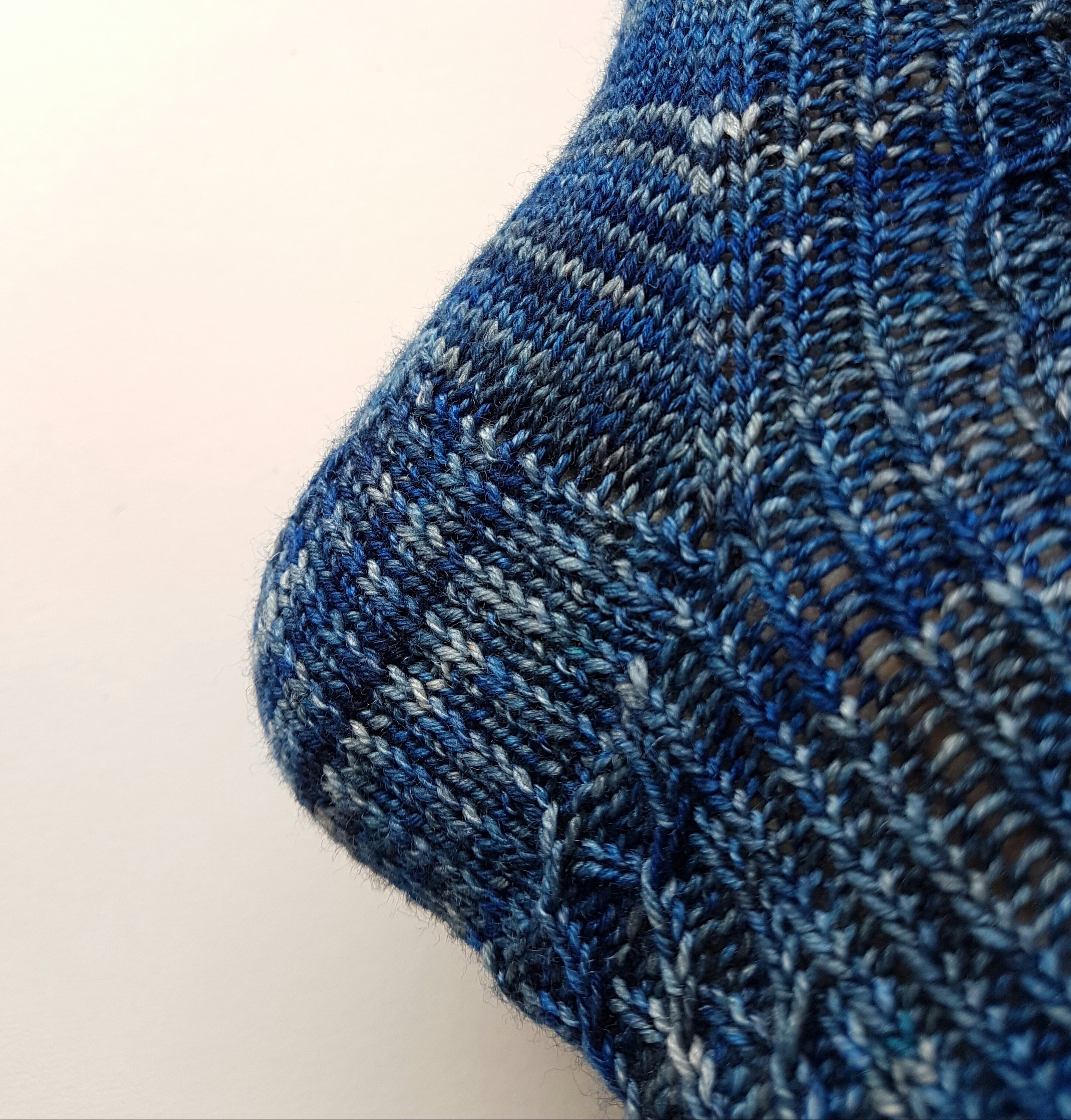
When it comes to the heel flap everyone has their personal favourite. I know some people who prefer a plain stocking stitch heel flap but personally I prefer something with a bit more texture and a bit more structure. The plain stocking stitch, whilst being smooth and simple to work can lack structure and end up creating a heel flap that is a bit too loose.

My personal favourite is a slipped stitch heel flap where the right side rows are worked (slip 1, Knit 1) all the way across and the wrong side rows are purled across (after the first stitch is slipped). This creates a thicker fabric as the slipped stitches create an extra layer of bulk across the back of the heel. The slipped stitches draw in the fabric and create a heel which grips better and gives a good fit.

There is also the Eye of Partridge heel where the right side rows are worked as follows:

Row 1: sl1, k1 to end

Row 2: sl1, p to end

Row 3: sl1, (sl1, k1 )to end

Row 4: sl1, p to end

This creates a really lovely texture, but it is a little bit more difficult to remember and for that reason it tends not to be my go-to heel. But it is well worth a go if you are looking for a pretty and fun alternative.


Invest in sock blockers

They really do make a big difference to the finished look of your socks. Yes they do cost a little bit of money but compared to all the time and effort you have put into knitting them it really isn't very much. If money is tight there are some great tutorials available online to make your own.

If the socks are for you there's absolutely nothing wrong with blocking them in the time honored fashion of bunging them on your feet. But if they are for a gift or, let's face it, if you want to photograph them and Instagram the heck out of them, then sock blockers are your friend.

Whether you choose wooden or plastic or whether you make your own, the blockers allow the stitches to properly relax under just the right amount of tension. Just pop you finished socks in to soak for 20 minutes, blot them dry with a towel, slip them onto the blockers and then leave them to air dry away from direct heat.

Then you can photograph the living daylights out of them.

A cunning use for dental floss

I’ve alluded to their use before when discussing toe-up socks and heel placement but one of the things I really recommend that every sock knitting bag has neatly stashed is a little roll of dental floss. It makes the perfect lifeline especially for socks where the stitches are likely to be very small. Using thicker yarn as a lifeline can distort the stitches and thinner yarn such as laceweight may not always have the required strength needed to stand up to being your lifeline.

A small roll of dental floss is brilliantly compact - and comes with it’s own little cutter. All you need to have to hand is a tapestry needle which your bag probably already has and you are good to go. Whenever you come a tricky point in your pattern or if you feel like you just need that little bit of extra reassurance, you can just whip in alifeleine in a matter of minutes and your sock progress is safe and secure.